
 AWOOF:- New MTN/ETISALAT/AIRTEL Unlimited Free Call/Browsing Code Now Available, Join Our WhatsApp Channel Asap to Get it
 |
♦  Kunlessi (¥ 23781 NU) Kunlessi (¥ 23781 NU) Star:Ultimate  Created Topics: 2342 Replies: 119 |
Posted on: 07:16 Tue, 16 Jun 2026
BIOLOGY PAPER I QUESTIONS:-
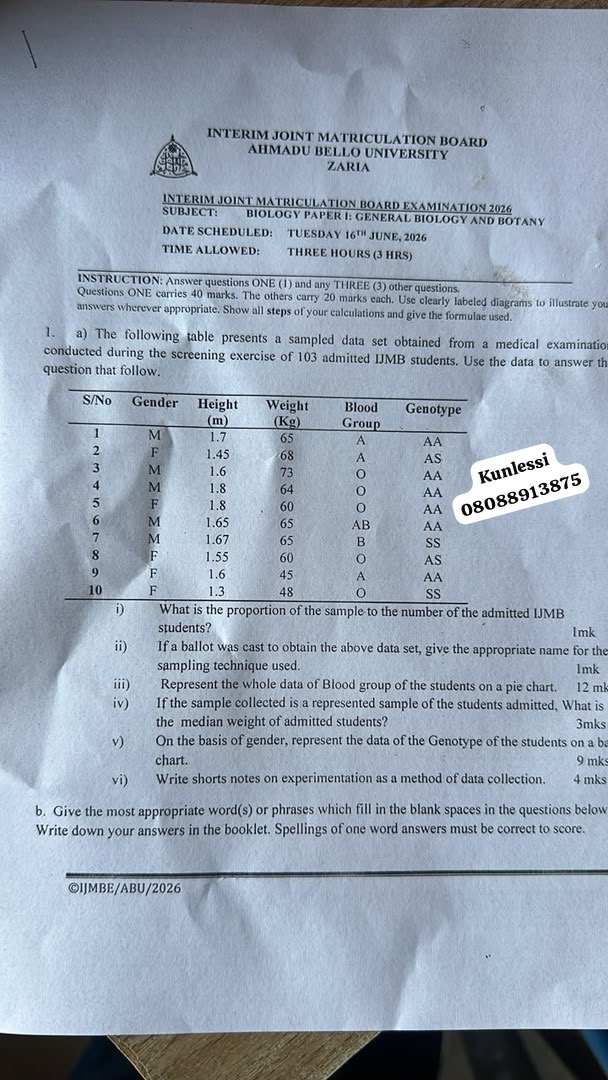
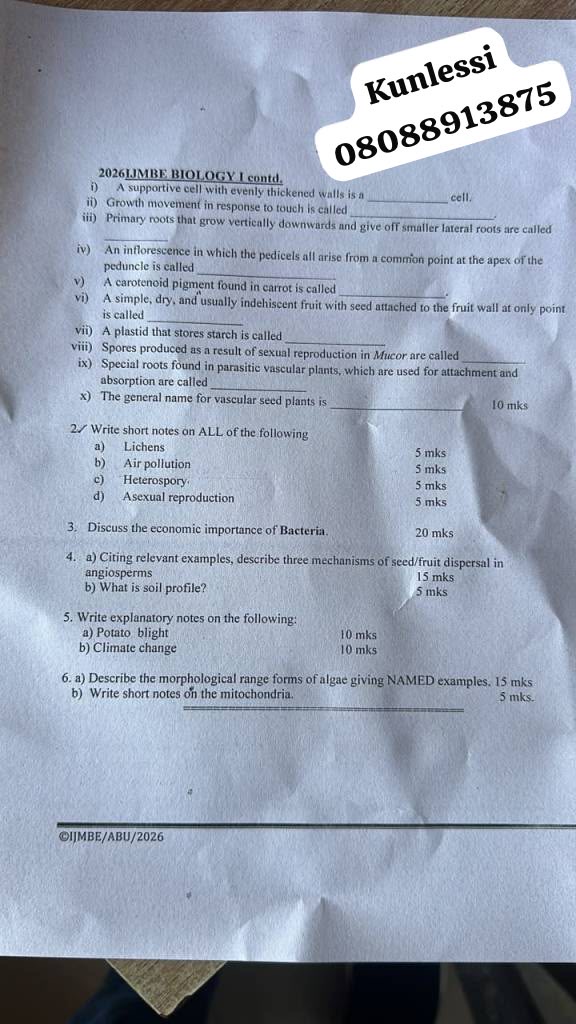
BIOLOGY PAPER I ANSWERS:-
(1)
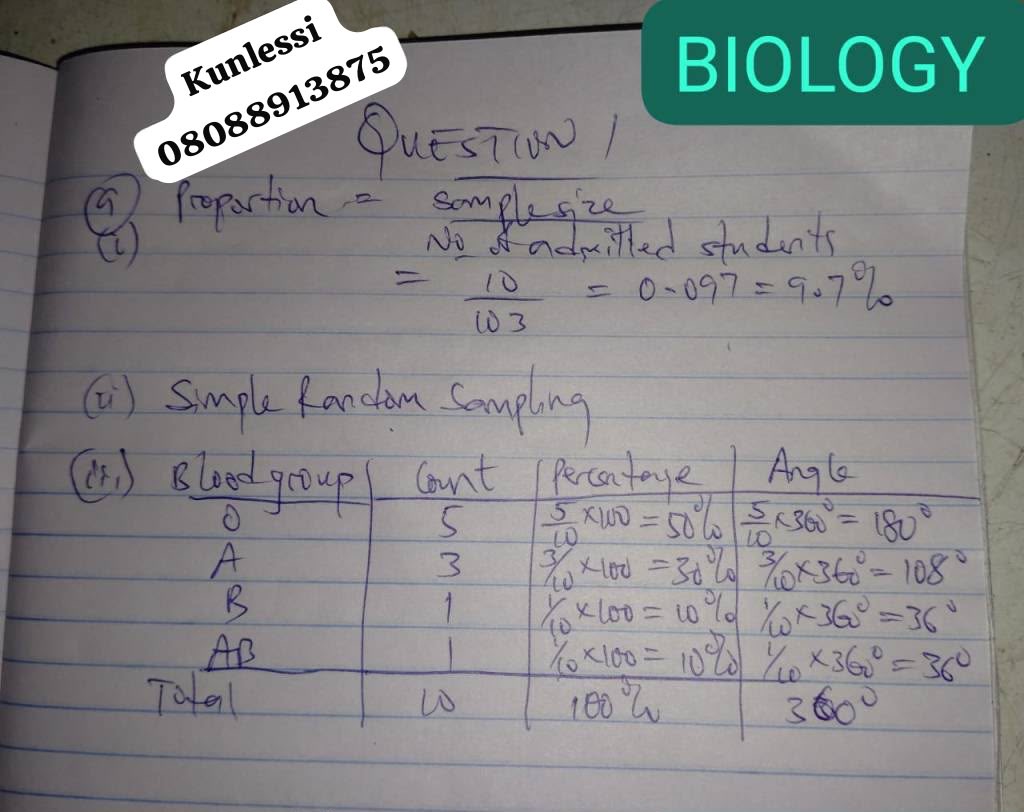
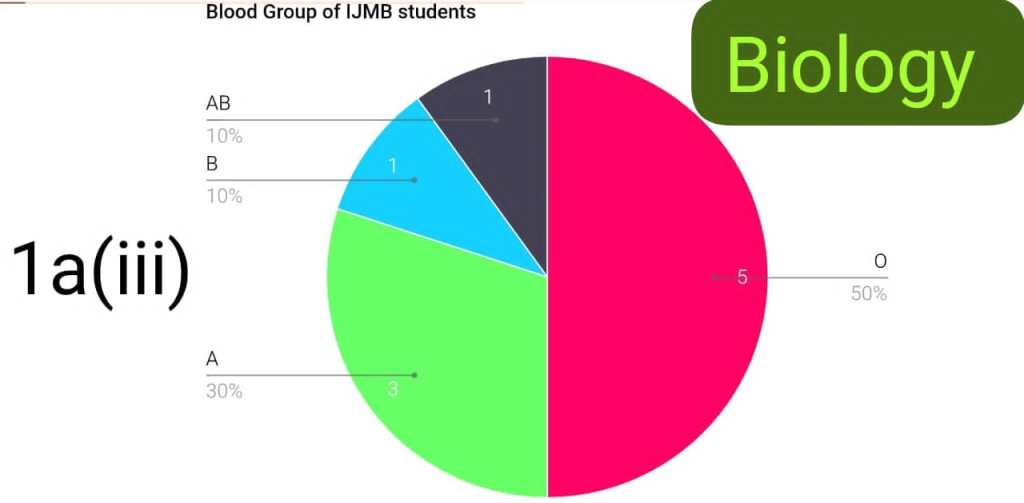
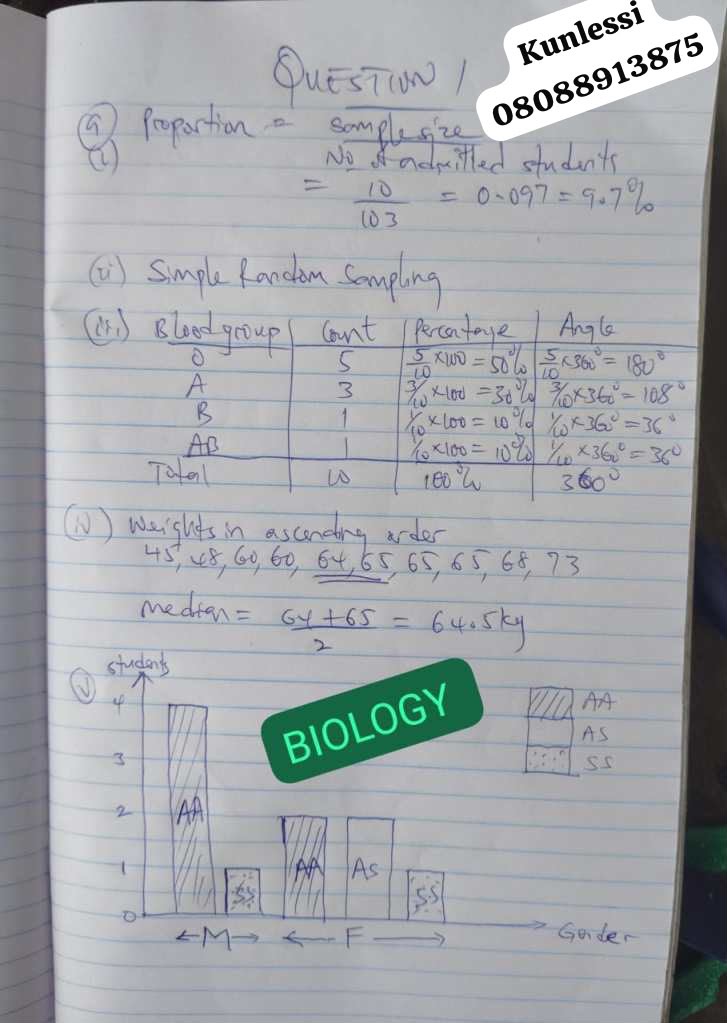
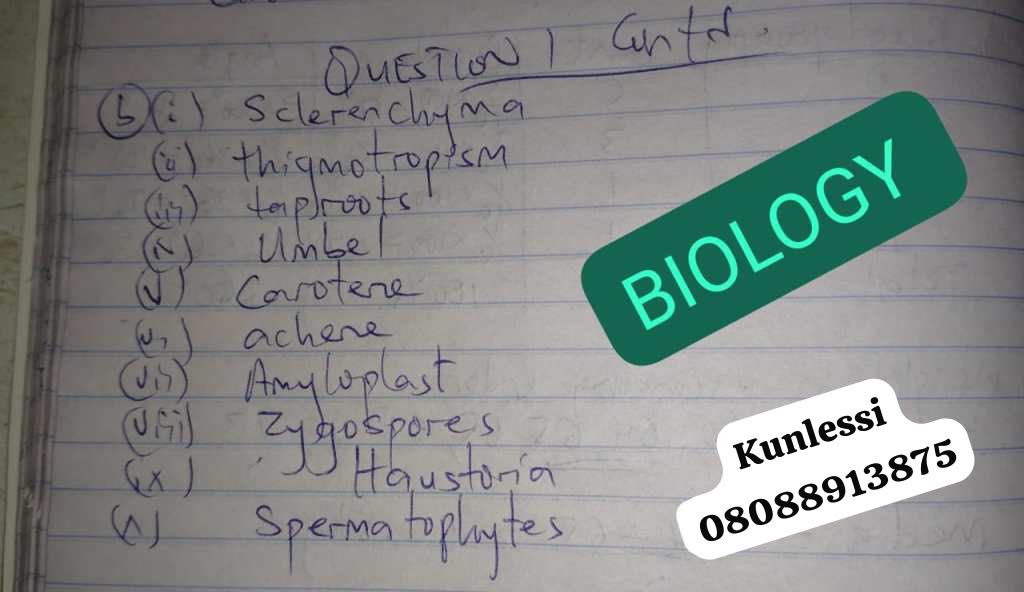
++++++++++++++++++++++++++++++++++
(2a) Lichens: Lichens are composite organisms formed by a symbiotic association between a fungus and an alga or cyanobacterium. The fungal partner provides protection, water, and minerals, while the algal partner carries out photosynthesis and supplies food. Lichens commonly grow on rocks, tree bark, and walls and are important indicators of air quality.
(2b) Air Pollution: Air pollution is the contamination of the atmosphere by harmful substances, including smoke, dust, gases, and industrial emissions. Major sources include vehicle exhausts, factory emissions, bush burning, and fossil fuel combustion. Air pollution can cause respiratory diseases, damage plants and animals, and contribute to global warming and acid rain.
(2c) Heterospory: Heterospory is the production of two different types of spores by the same plant, namely microspores (male spores) and megaspores (female spores). This condition occurs in some pteridophytes and seed plants. Heterospory represents an important evolutionary step toward the development of seeds and the emergence of separate male and female gametophytes.
(2d) Asexual Reproduction: Asexual reproduction is a mode of reproduction in which offspring are produced from a single parent without the fusion of gametes. The offspring are genetically identical to the parent. Common methods include binary fission, budding, fragmentation, spore formation, and vegetative propagation. It allows rapid multiplication and colonization of suitable environments.
+++++++++++++++++++++++++++++++++++++
(3)
(i) Decomposition of Organic Matter: Bacteria play a vital role as decomposers by breaking down dead plants, animals, and organic wastes into simpler substances. This process recycles nutrients back into the soil, improves soil fertility, and maintains ecological balance.
(ii) Nitrogen Fixation and Soil Fertility: Certain bacteria such as Rhizobium convert atmospheric nitrogen into forms that plants can absorb and utilize. This enriches the soil with nitrogen compounds, promotes plant growth, and increases agricultural productivity.
(iii) Food Production and Fermentation: Bacteria are used in the production of various foods through fermentation. For example, Lactobacillus is used in making yoghurt, cheese, and other dairy products. Fermentation improves food preservation, taste, and nutritional value.
(iv) Industrial and Pharmaceutical Uses: Bacteria are employed in the manufacture of antibiotics, enzymes, vitamins, and organic acids. Antibiotics such as streptomycin and tetracycline are produced by bacterial species and are widely used in medicine to treat diseases.
(v) Sewage Treatment and Waste Management: Bacteria help in the decomposition of sewage and organic wastes in treatment plants. They break down harmful substances, reduce pollution, and make waste disposal safer for the environment.
(vi) Biotechnology and Genetic Engineering: Bacteria are widely used in scientific research and biotechnology. They serve as hosts for recombinant DNA technology, enabling the production of insulin, vaccines, growth hormones, and other useful biological products.
(vii) Bioremediation and Environmental Protection: Some bacteria can degrade toxic chemicals, oil spills, pesticides, and other pollutants. This process, known as bioremediation, helps to clean contaminated soil and water, thereby protecting the environment and public health.
+++++++++++++++++++++++++++++++++++++
(4a)
(i) Wind dispersal: Wind dispersal is the movement of seeds or fruits from the parent plant through air currents. Light seeds or fruits with wings or hairs are carried over long distances. Examples: Dandelion, cotton, maple, and calotropis.
(ii) Water dispersal: Water dispersal occurs when seeds or fruits float and are carried away by water bodies such as rivers, streams, or oceans. These seeds usually have buoyant or fibrous coverings that prevent sinking. Examples: Coconut, water lily, mangrove, and raffia palm.
(iii) Animal dispersal: Animal dispersal happens when seeds or fruits are transported by animals either externally (sticking to fur or skin) or internally after being eaten. These seeds often have hooks, spines, or fleshy fruits. Examples: Mango, guava, burdock, and tomato.
(4b)
A soil profile is a vertical section of the soil that shows its different layers or horizons from the surface down to the parent rock. It reveals the arrangement of soil layers such as topsoil, subsoil, and underlying material, each differing in color, texture, and composition.
+++++++++++++++++++++++++++++++++++++
(5a)
Potato blight: Potato blight is a serious plant disease that affects potatoes and is caused by a fungus-like organism known as Phytophthora infestans. It spreads rapidly under cool and wet conditions, attacking leaves, stems, and tubers. The disease causes dark patches on leaves which later rot and collapse, leading to a significant reduction in crop yield. In severe cases, it can destroy an entire potato farm if not properly controlled. Control measures include the use of resistant varieties, proper field hygiene, crop rotation, and application of fungicides.
(5b)
Climate Change: Climate change is the long-term alteration in the average weather conditions of the Earth, such as temperature, rainfall, and wind patterns. It is mainly caused by increased concentrations of greenhouse gases like carbon dioxide and methane due to human activities such as burning fossil fuels, deforestation, and industrial processes. Climate change leads to effects such as rising global temperatures, melting ice caps, sea level rise, droughts, floods, and disruption of ecosystems. It can also affect agriculture, water supply, and human health. Mitigation measures include afforestation, reduced carbon emissions, and the use of renewable energy sources.
=================================
SUBSCRIBE FOR MY IJMB EXAM RUNS AND PASS YOUR EXAM IN ONE SITTING, QUESTIONS & ANSWERS DROPS 4 HOURS BEFORE EXAM 12 POINTS ABOVE GUARANTEED CALL/WHATSAPP MR. KUNLESSI EXAM HELPDESK ON 08088913875
=====================================


BIOLOGY PAPER I QUESTIONS:-
BIOLOGY PAPER I ANSWERS:-
(1)
++++++++++++++++++++++++++++++++++
(2a) Lichens: Lichens are composite organisms formed by a symbiotic association between a fungus and an alga or cyanobacterium. The fungal partner provides protection, water, and minerals, while the algal partner carries out photosynthesis and supplies food. Lichens commonly grow on rocks, tree bark, and walls and are important indicators of air quality.
(2b) Air Pollution: Air pollution is the contamination of the atmosphere by harmful substances, including smoke, dust, gases, and industrial emissions. Major sources include vehicle exhausts, factory emissions, bush burning, and fossil fuel combustion. Air pollution can cause respiratory diseases, damage plants and animals, and contribute to global warming and acid rain.
(2c) Heterospory: Heterospory is the production of two different types of spores by the same plant, namely microspores (male spores) and megaspores (female spores). This condition occurs in some pteridophytes and seed plants. Heterospory represents an important evolutionary step toward the development of seeds and the emergence of separate male and female gametophytes.
(2d) Asexual Reproduction: Asexual reproduction is a mode of reproduction in which offspring are produced from a single parent without the fusion of gametes. The offspring are genetically identical to the parent. Common methods include binary fission, budding, fragmentation, spore formation, and vegetative propagation. It allows rapid multiplication and colonization of suitable environments.
+++++++++++++++++++++++++++++++++++++
(3)
(i) Decomposition of Organic Matter: Bacteria play a vital role as decomposers by breaking down dead plants, animals, and organic wastes into simpler substances. This process recycles nutrients back into the soil, improves soil fertility, and maintains ecological balance.
(ii) Nitrogen Fixation and Soil Fertility: Certain bacteria such as Rhizobium convert atmospheric nitrogen into forms that plants can absorb and utilize. This enriches the soil with nitrogen compounds, promotes plant growth, and increases agricultural productivity.
(iii) Food Production and Fermentation: Bacteria are used in the production of various foods through fermentation. For example, Lactobacillus is used in making yoghurt, cheese, and other dairy products. Fermentation improves food preservation, taste, and nutritional value.
(iv) Industrial and Pharmaceutical Uses: Bacteria are employed in the manufacture of antibiotics, enzymes, vitamins, and organic acids. Antibiotics such as streptomycin and tetracycline are produced by bacterial species and are widely used in medicine to treat diseases.
(v) Sewage Treatment and Waste Management: Bacteria help in the decomposition of sewage and organic wastes in treatment plants. They break down harmful substances, reduce pollution, and make waste disposal safer for the environment.
(vi) Biotechnology and Genetic Engineering: Bacteria are widely used in scientific research and biotechnology. They serve as hosts for recombinant DNA technology, enabling the production of insulin, vaccines, growth hormones, and other useful biological products.
(vii) Bioremediation and Environmental Protection: Some bacteria can degrade toxic chemicals, oil spills, pesticides, and other pollutants. This process, known as bioremediation, helps to clean contaminated soil and water, thereby protecting the environment and public health.
+++++++++++++++++++++++++++++++++++++
(4a)
(i) Wind dispersal: Wind dispersal is the movement of seeds or fruits from the parent plant through air currents. Light seeds or fruits with wings or hairs are carried over long distances. Examples: Dandelion, cotton, maple, and calotropis.
(ii) Water dispersal: Water dispersal occurs when seeds or fruits float and are carried away by water bodies such as rivers, streams, or oceans. These seeds usually have buoyant or fibrous coverings that prevent sinking. Examples: Coconut, water lily, mangrove, and raffia palm.
(iii) Animal dispersal: Animal dispersal happens when seeds or fruits are transported by animals either externally (sticking to fur or skin) or internally after being eaten. These seeds often have hooks, spines, or fleshy fruits. Examples: Mango, guava, burdock, and tomato.
(4b)
A soil profile is a vertical section of the soil that shows its different layers or horizons from the surface down to the parent rock. It reveals the arrangement of soil layers such as topsoil, subsoil, and underlying material, each differing in color, texture, and composition.
+++++++++++++++++++++++++++++++++++++
(5a)
Potato blight: Potato blight is a serious plant disease that affects potatoes and is caused by a fungus-like organism known as Phytophthora infestans. It spreads rapidly under cool and wet conditions, attacking leaves, stems, and tubers. The disease causes dark patches on leaves which later rot and collapse, leading to a significant reduction in crop yield. In severe cases, it can destroy an entire potato farm if not properly controlled. Control measures include the use of resistant varieties, proper field hygiene, crop rotation, and application of fungicides.
(5b)
Climate Change: Climate change is the long-term alteration in the average weather conditions of the Earth, such as temperature, rainfall, and wind patterns. It is mainly caused by increased concentrations of greenhouse gases like carbon dioxide and methane due to human activities such as burning fossil fuels, deforestation, and industrial processes. Climate change leads to effects such as rising global temperatures, melting ice caps, sea level rise, droughts, floods, and disruption of ecosystems. It can also affect agriculture, water supply, and human health. Mitigation measures include afforestation, reduced carbon emissions, and the use of renewable energy sources.
=================================
SUBSCRIBE FOR MY IJMB EXAM RUNS AND PASS YOUR EXAM IN ONE SITTING, QUESTIONS & ANSWERS DROPS 4 HOURS BEFORE EXAM 12 POINTS ABOVE GUARANTEED CALL/WHATSAPP MR. KUNLESSI EXAM HELPDESK ON 08088913875
=====================================
![[download]](../images/download.png)

